

Magic of Migration
By Isaac and Katie Milesky-Rath
Migration is something you’ve likely heard about in the context of birds heading south for winter. In reality, the majority of animals will embark on some type of migration in their life. In the US, you’ve probably seen flocks of dozens, if not hundreds, if not thousands of geese flying in a “V” formation in the fall each year. They are leaving their breeding grounds in the north for warmer climates in the south. Some birds like the Bar-Tailed Godwit fly from Alaska all the way to New Zealand. They can do this nonstop, a flight of over 13,560 kilometres (8,435 miles), which is an incredible feat in itself.
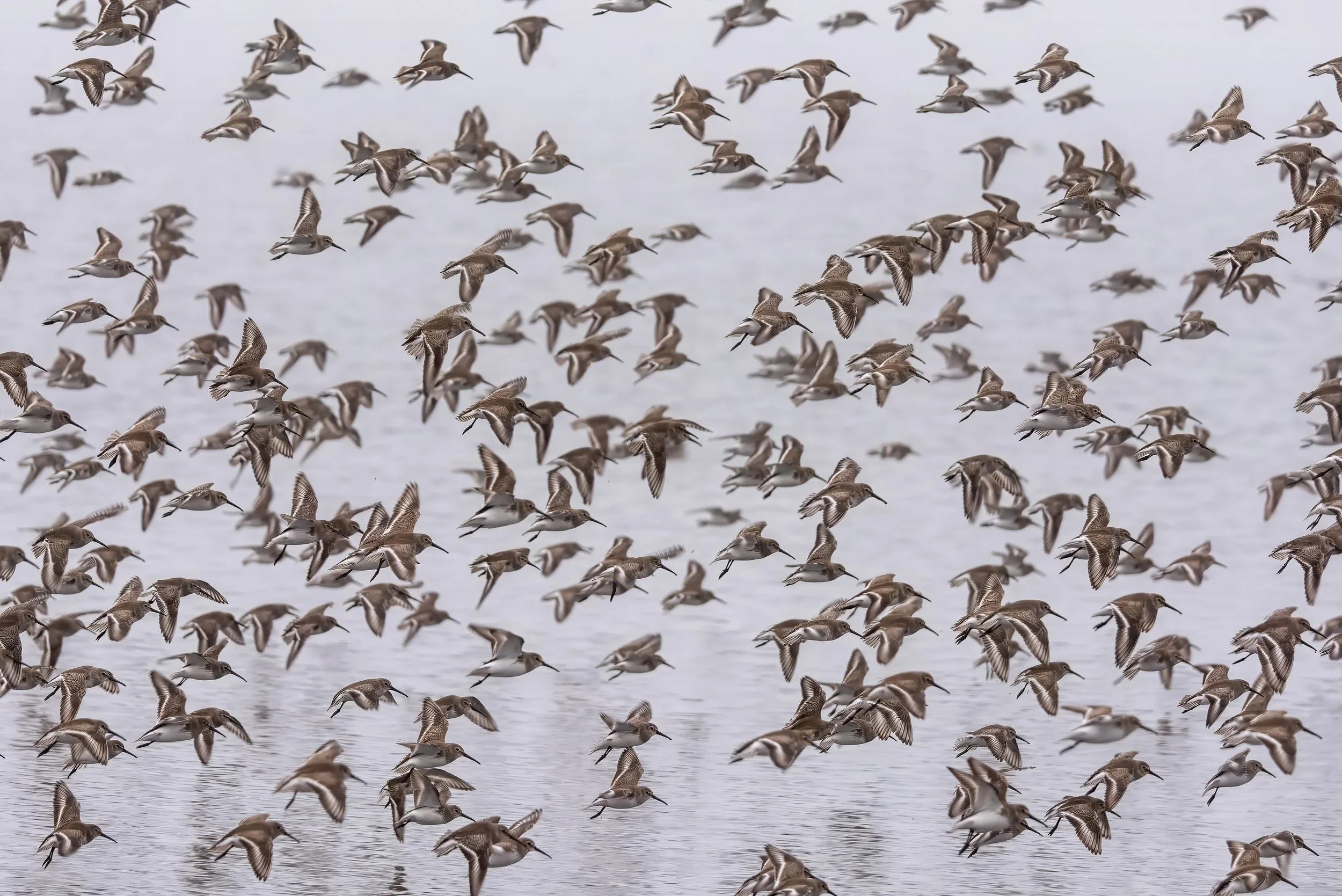
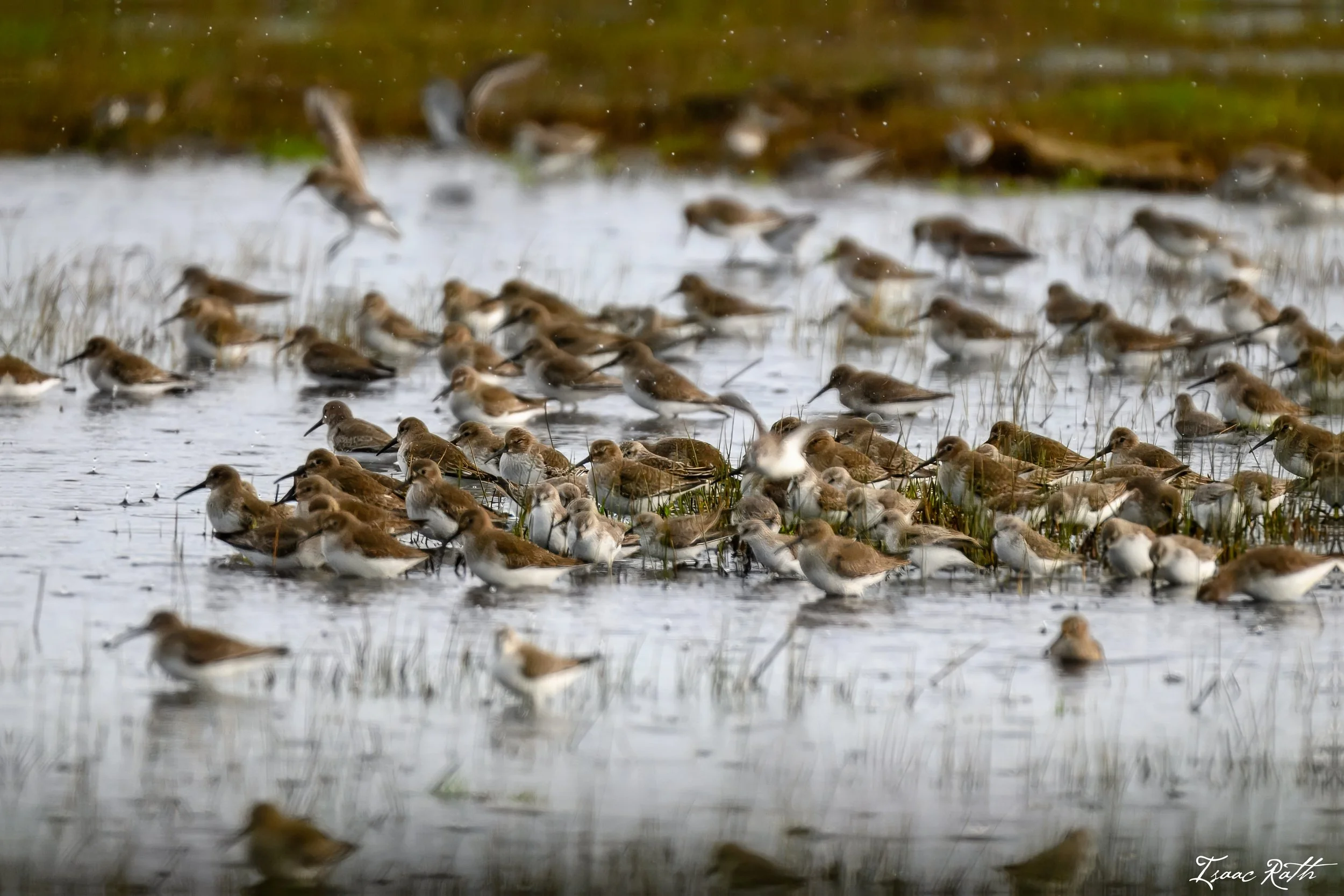
Other birds like the North American Blue Grouse have a migration that is next to nothing but very important for their survival. They move about 300m (984ft), less than one lap around a standard high school track, from high mountains to lower meadows where their food will be year-round. Some may say that this does not count as a migration as it’s such a short distance; by definition, migration is “a seasonal move from one area to another.” In that case, the distance doesn’t matter.
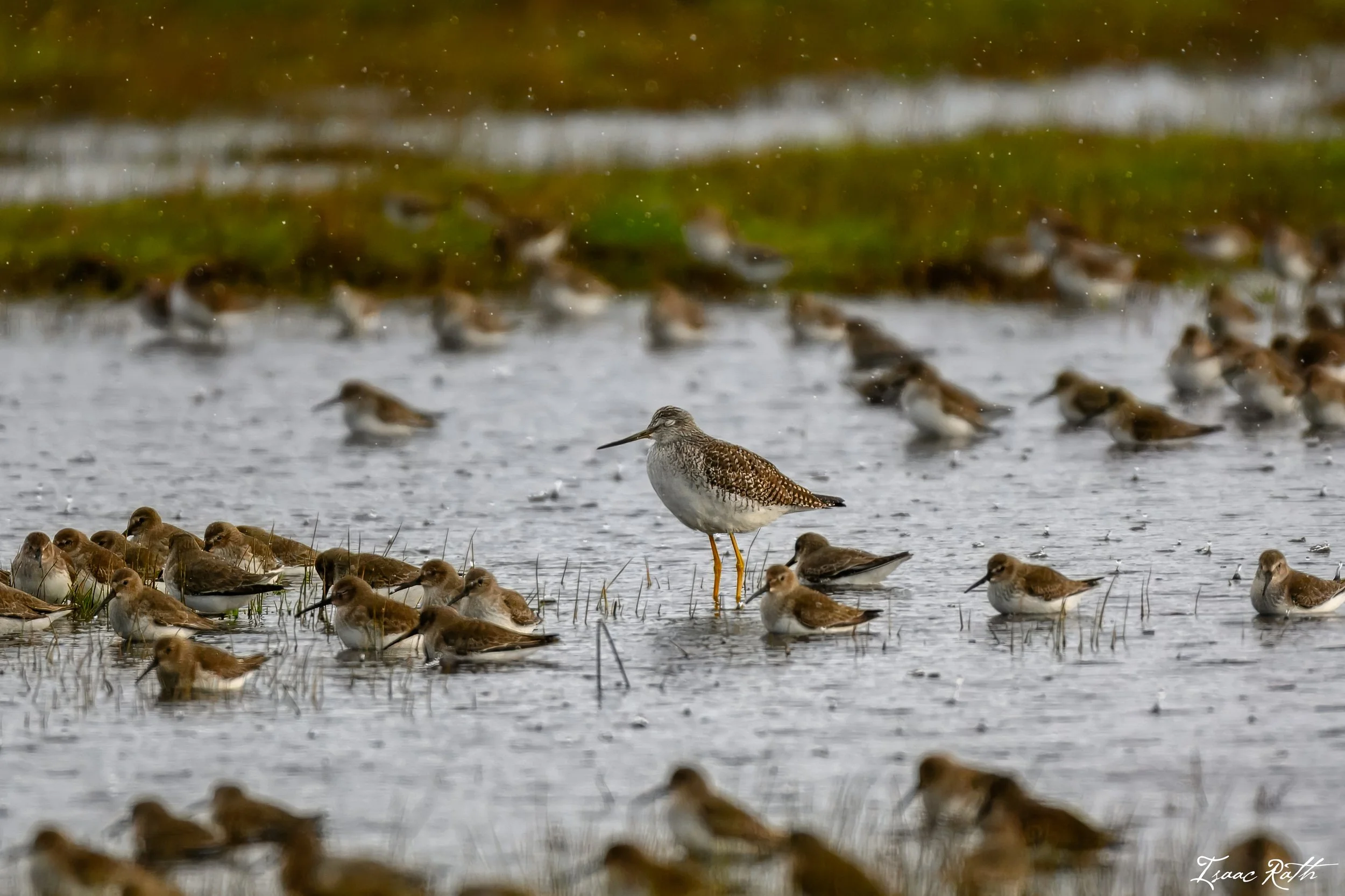
As the birds go south, there are some areas that are key layover spots for them to rest. Two main spots on the west coast along what is known as the “Pacific American Flyway” are Humboldt Bay in northern California as well as San Francisco Bay. Katie and I took a short trip to both places last week to catch a glimpse of some of these travellers. Birds that cross international borders during their migration are harder for humans to protect, as each country has varying laws in place. Conservationists work closely with each other to try to keep these animals out of harm’s way when they are traveling between countries.
To prepare for their journey, these birds will rest and eat as much as possible, sometimes even doubling their weight before they begin their journey. By the time they arrive at their final destination, most if not all of these reserves have been lost. This behavior, refered to as “Zugunruhe,” is translated to “migratory restlessness”.
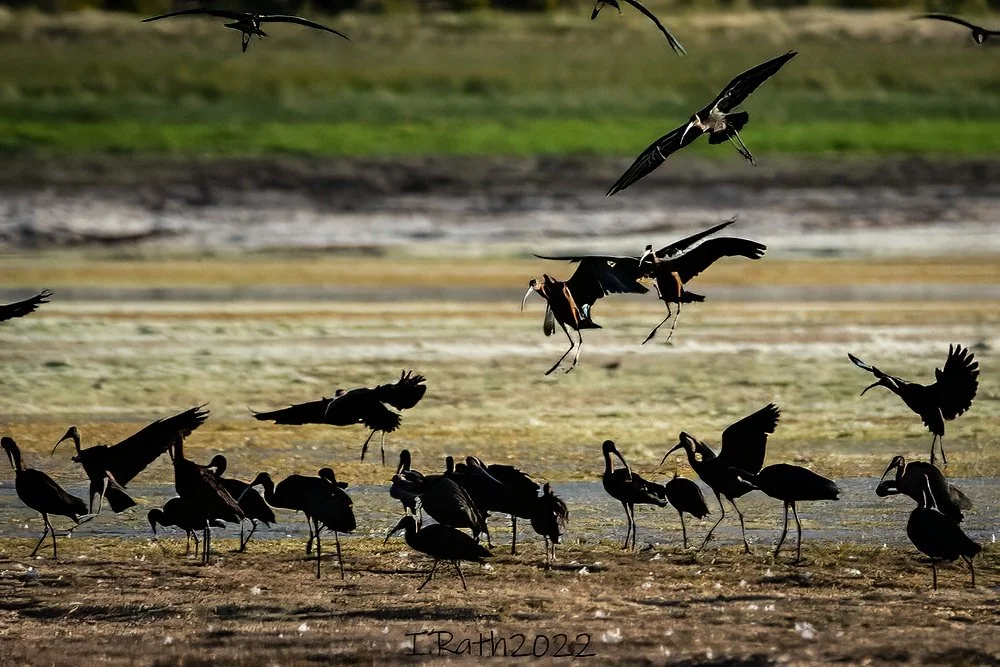
Not all birds migrate the same, and in fact, some don’t migrate at all. These birds are known to be “permanent residents”. These species are able to find adequate food in their region all throughout the year and are not bothered by cold weather, and thus have no reason to migrate, so they don’t. A few that you may have seen in your backyard are Northern Cardinals, House Finches, Great Horned and Barn Owls, and many more. Short-distance migrants make relatively small movements, such as from higher to lower elevations on a mountainside, like the North American Blue Grouse we mentioned earlier and the Greater Sage-Grouse. Medium-distance migrants cover distances that span a few hundred miles, such as Blue Jays and Red-Tailed Hawks. Long-distance migrants typically move from breeding ranges in the United States and Canada to wintering grounds in Central and South America or even further. Many shorebirds and pelagics fall into this category, such as Bar-Tailed Godwit, Sooty Shearwaters, and Arctic Terns.
Ornithologist and conservationist are noting large declines in the populations of many of these shorebirds, especially the smaller ones. This is the result of losing much of their key layover habitat for them to rest and refuel during their travel. It’s imperitive that we as humans prioritize the protection of these areas over profits to ensure these animals are able to continue making the journey they’ve been making for hundreds of years.
