

Hawaii Adventure
By Isaac and Katie Milesky-Rath
Photos by Isaac and Katie Milesky-Rath
Katie and I recently (like, last week) took an impromptu trip to the Hawaiian Islands. Specifically, we traveled to Maui and the Big Island, Hawai’i. Katie had been to these places before, but for me, it was all news. The good news (for me), was that Katie hadn’t yet become a birder when she traveled to the islands before, so we had the same goal: find endemic birds. Not just birds, but any endemic animal, meaning wildlife that can only be found on these islands.
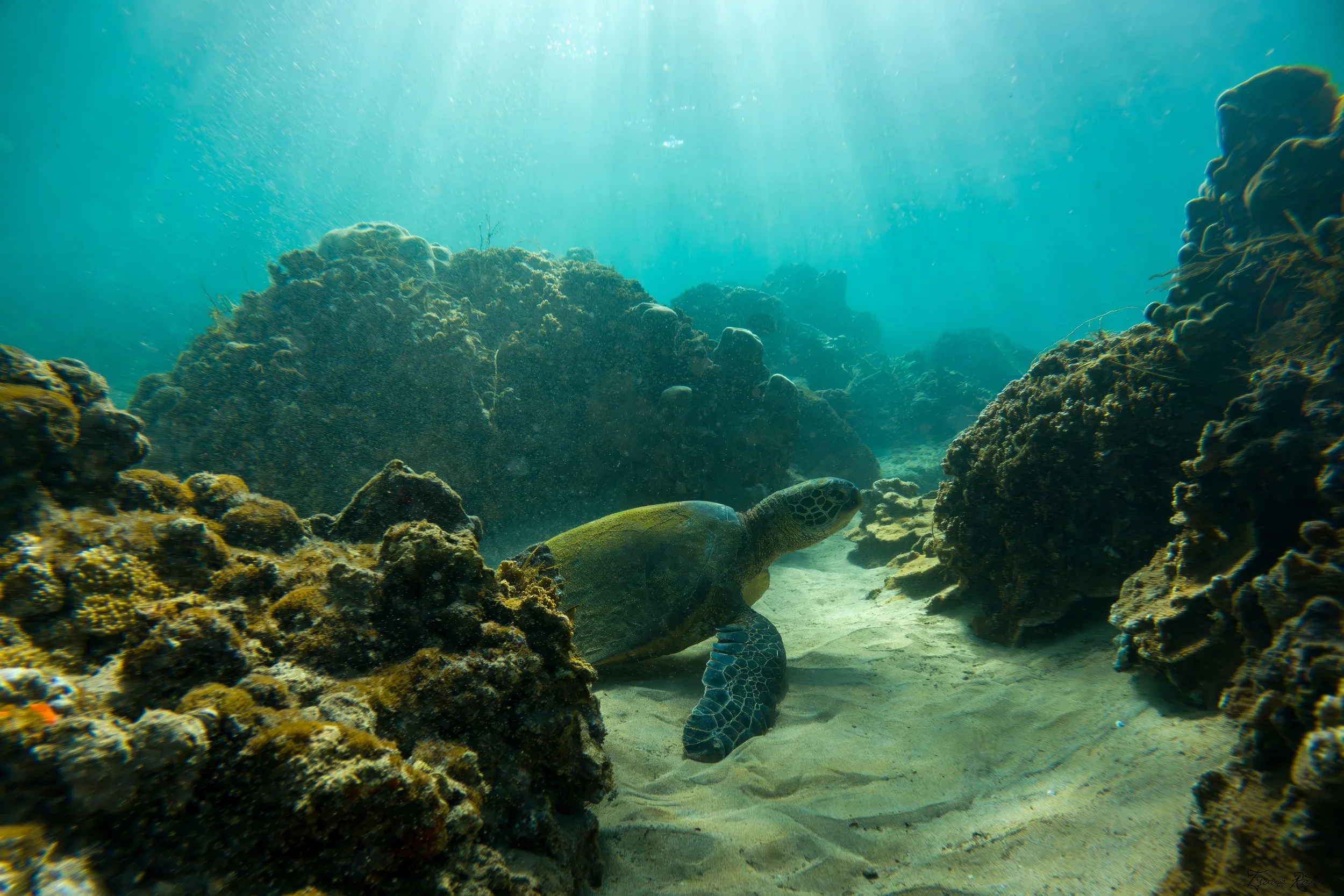
The Hawaiian Green Sea Turtle is one animal that comes to Hawaii for breeding and laying its eggs. Hawaii is a very important place for them, and if it gets overdeveloped, it can lead to the decline of the turtles. If Hawaii loses its wild beaches, due to tourism or climate change, it will prove detrimental to the turtle population.
The Hawaiian Green Sea Turtle is also an open water animal, meaning that it migrates to the open ocean, where it encounters different problems. In the open ocean, you can find lots of long-line fishing and fishing nets. If these lines and nets get away from the fishermen, they are often forgotten about and left to the ocean, where they float around and entrap or entangle wildlife. They are known as ghost nets.
After donning our reef safe sunscreen, we took several trips into the water to explore the fragile ecosystems near the reefs. One animal that we really wanted to see was the state fish - the Humuhumunukunukuapua'a. We did find this fish; however, we were unable to get it on video. Or, we did, but then the footage met a watery demise (we flipped a kayak, and that GoPro sunk to the bottom of the ocean). We did manage to find tons of other species of fish as well, and some of them are simply incredible to look at. I had mixed emotions snorkeling these reefs because I noticed a lot of the coral was dead or dying. This is due to the rising temperatures, increasing the pH of the water, killing the sensitive coral. Some things we can do to protect these delicate ecosystems are to practice sustainable snorkeling and diving practices, such as refraining from touching or stepping on coral, as well as anchoring boats to them. Using sunscreens that use non-nano zinc oxide as their active ingredient, as they are generally reef-friendly. Keeping the water clean by avoiding leaving trash behind when we visit can make a difference as well. Even if you don’t live near or plan to visit the ocean any time soon - just by being selective in the seafood you buy can help keep our ocean ecosystems healthy. Do your best to choose seafood that is harvested sustainably to maintain fish populations. Every choice you make matters, no matter how small!
